Skip to content

Open 24/7Upfront pricing

Hot water and heating in Bristol

Water heater repair in Bristol for combis, cylinders and more

No hot water, a boiler that keeps losing pressure or a cylinder that leaks. We find the cause and explain your options in plain terms.

0117 496 0377 Call now
  • Combi boilers, cylinders and immersion heaters
  • Straight advice on repair or replacement
  • A written quote before work starts
Request a plumber
How soon do you need help?

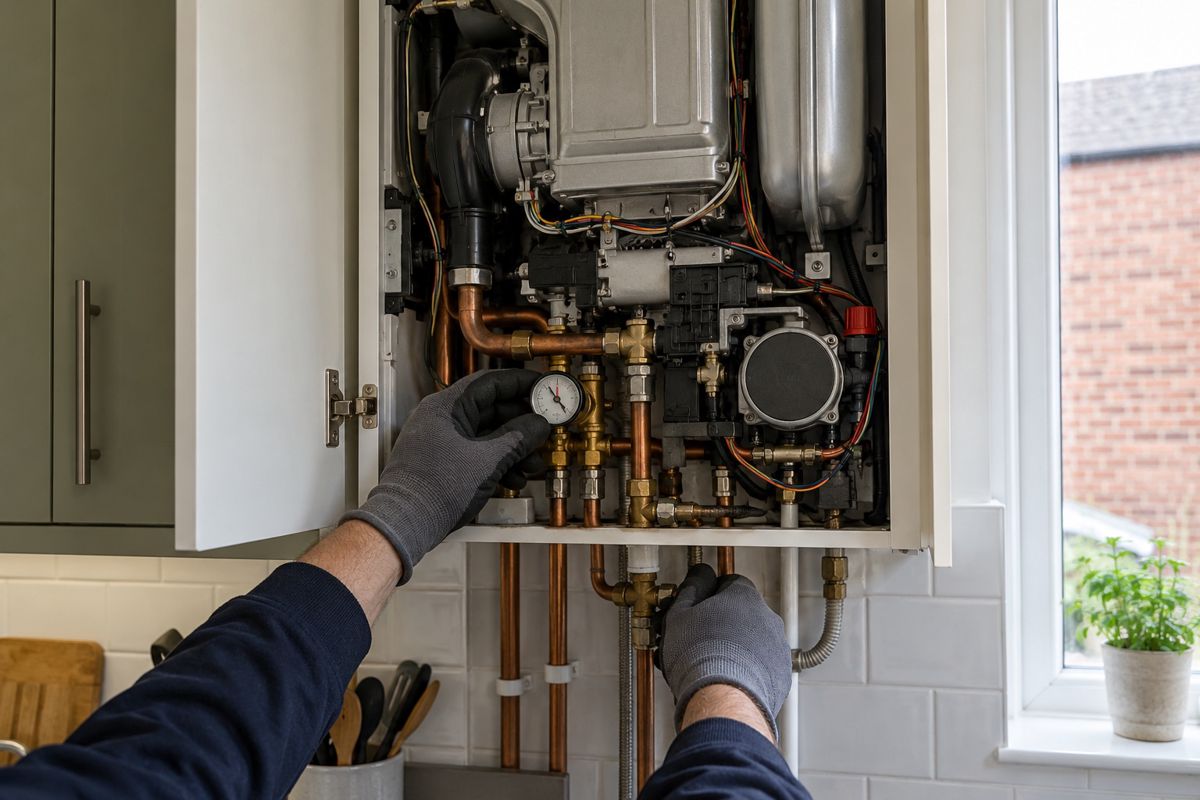
Plumber's gloved hands checking a combi boiler in a kitchen cupboard

What counts as water heater repair in a UK home?

In the US the phrase means a tank in the garage. In Bristol homes, hot water usually comes from one of four set-ups, and the repair is different for each.

  • Combi boiler. Heats water on demand when you open a tap, with no tank. This is the tankless system many people ask about.
  • System or regular boiler with a hot water cylinder. The boiler heats a stored tank, often in an airing cupboard.
  • Unvented cylinder. A sealed, mains-fed cylinder that gives strong pressure to showers.
  • Electric and immersion heaters. Common in flats and homes without a gas supply.

If you are searching for water heater repair Bristol firms offer, start by working out which of these you have. The label on the boiler or cylinder shows the make and model, which helps the plumber bring the right parts.

Why has my hot water stopped working?

Common faults

  • No hot water at all. Often a boiler lockout, a failed diverter valve, a faulty thermostat, a lost power supply or a burnt out immersion element.
  • Lukewarm or inconsistent water. Limescale on the heat exchanger, a worn valve or a cylinder thermostat that has failed.
  • Boiler pressure keeps dropping. A leak somewhere in the system, a failing expansion vessel or a pressure relief valve that is discharging.
  • Banging or kettling noises. Usually scale building up inside the heat exchanger.
  • Water around the cylinder. A failed joint or valve, or a leak from the cylinder body, which usually means replacement.

Bristol is a hard water area, so limescale is behind a large share of these faults. It coats heat exchangers and clogs the narrow passages inside combi boilers, so a system that worked well for years can turn slow to heat or noisy.

Before you ring, check the pressure gauge, the thermostat and programmer settings, and whether other taps run cold. Please do not take boiler covers off yourself.

Should I repair or replace my boiler or cylinder?

There is no single rule, but these questions help.

  • How old is the unit, and are parts still made for it?
  • Is this the first fault, or the third this winter?
  • Would the repair cost a large part of the price of a new unit?
  • Does the system still suit the household? A combi that was fine for a couple can struggle once a family needs two showers at once.

A cylinder that leaks from the body, a failed heat exchanger or a boiler that parts are no longer made for are common reasons to replace. A thermostat, valve or pump is often a straightforward fix. We tell you honestly which side of the line you are on and give the options in writing.

Fitting a gas boiler is regulated work, so check the installer's credentials before agreeing to anything. A modern condensing boiler can use less gas than an old one, but how much you save depends on your home and how you use it.

Hot water jobs vary more than most. These are the things that move the price.

  • The fault and the part it needs
  • The make and age of the boiler or cylinder
  • Where it sits: a kitchen cupboard is easier than a loft or a cellar
  • Whether the system needs flushing, which is common where hard water has caused scale
  • Whether pipework or the flue has to change

A simple part swap can be done in one visit if the part is to hand. Others need a second visit while a part is ordered. A like-for-like boiler replacement is usually a day or two of work, and longer if the boiler is moving to a new position. Your written quote will say what the job includes.

What happens on the day, and when should I call?

The plumber checks the system, runs it, finds the fault and explains it in plain words. You get a written quote before any parts are fitted. Floors and furniture are protected, and the area is cleaned up afterwards. When the repair is finished, the plumber tests hot water at the taps and shower and shows you the pressure gauge and controls.

Call us when

  • There has been no hot water for a day or more, especially in cold weather
  • Water is leaking from the boiler or cylinder. Read our emergency plumbing page for what to do while you wait
  • The boiler keeps shutting down. In a cold snap, a frozen condensate pipe is a common cause
  • You can see damp under a floor or on a wall that may be a hidden pipe fault. See our leak detection page

If you smell gas, see soot or black marks on the boiler, or a carbon monoxide alarm sounds, stop using the appliance, open windows, leave the property and call the National Gas Emergency Service. You can also return to the home page for the rest of our services.

How it works

  1. Step 1

    Call or tap for help

    Tell us what is wrong. We answer around the clock.

  2. Step 2

    Plumber dispatched

    The nearest plumber heads your way with a stocked van.

  3. Step 3

    Fixed with a written price

    You approve the price before any work starts.

What you can expect

  1. Open 24/7

  2. Upfront pricing

  3. Clear communication

  4. Local plumbers

How soon do you need help?

Questions about emergency plumber in Bristol

Is a combi boiler the same as a tankless water heater?

In practice, yes. A combi boiler heats water as you use it, so there is no tank to fill and no cylinder to find room for. It also provides central heating. The trade-off is that flow can drop if two taps or showers run at once, and it drops further in winter when the incoming water is colder.

Why does my boiler keep losing pressure?

A drop in pressure usually means water is escaping from the system, from a pipe joint, a radiator valve, the pressure relief valve or a failing expansion vessel. Topping up with the filling loop only buys time. If it falls again within days, have it looked at. Check under the boiler and along heating pipes for damp or drips.

How do I know if a plumber is allowed to work on my boiler?

For gas boilers, ask to see a Gas Safe ID card. The back lists what the engineer is registered to do, and you can confirm the number on the Gas Safe Register website. If someone cannot show you a card, do not let them touch a gas appliance. Boilers fitted by an unregistered person can be unsafe and can cause trouble when you sell the home.

Does hard water damage my hot water system?

Yes, over time. Limescale builds up on heat exchangers, in valves and on immersion elements. That makes the system work harder, heat more slowly and wear out sooner. A plumber can flush a system, fit a scale inhibitor or suggest a water conditioner. Which of these suits you depends on the boiler and how hard the water is where you live.

Why does my shower run cold in winter?

Not always a fault. A combi boiler heats the water as it passes through, and in winter the water coming in is colder, so the boiler has to work harder and flow can fall. If the shower used to be fine and has become weak or cold, scale, a blocked filter or a failing diverter valve is more likely, and worth having checked.

Ready when you are

Call now or request a quote online.

0117 496 0377