
Skip to content

Open 24/7Upfront pricing

Hidden leaks and repiping in Bristol

Slab leak detection in Bristol for hidden leaks and old pipes

A leak under a solid floor or inside a wall rarely announces itself. We trace the source and explain whether a repair or a repipe makes sense.

0117 496 0377 Call now
  • Finding the source before anything is cut open
  • Repair or repipe, explained in plain terms
  • Advice on lead and corroded pipework
Request a plumber
How soon do you need help?

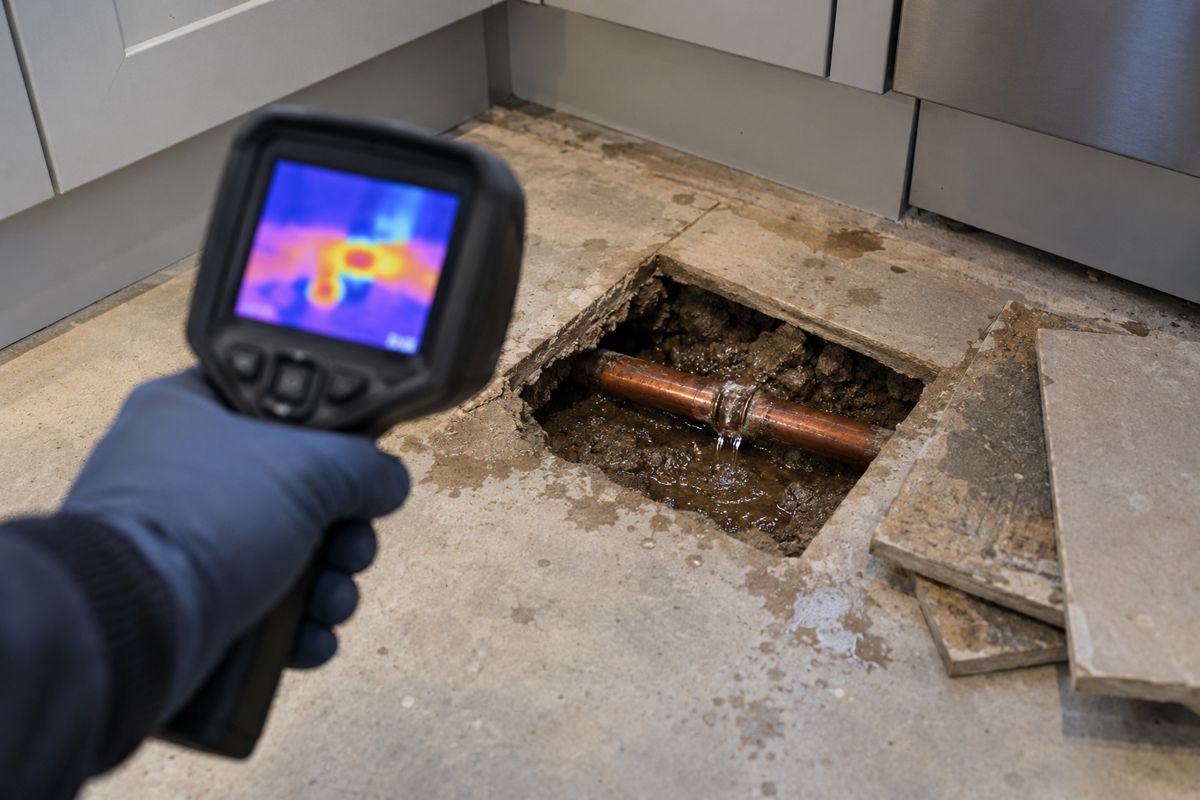
Concrete floor opened up to show a leaking copper pipe

What is a slab leak, and does it happen in UK homes?

A slab leak is a leak in a pipe that runs under or inside a solid concrete floor. Slab leak detection Bristol homeowners ask about covers that, and also leaks inside walls, ceilings and under timber floors, because the problem is the same: water escaping where you cannot see it.

Many older Bristol terraces have suspended timber floors on the ground floor, but plenty of homes have solid concrete. Extensions, kitchens built out at the back, 1950s and later houses, ground floor flats and newer builds often have pipes running in screed or under the slab. Underfloor heating pipes are buried in the same way.

A leak in any of these places can run for weeks before anything shows. By then the floor may be damp, the bill higher and the structure under strain.

What are the signs of a hidden leak?

  • The water meter keeps turning when every tap and appliance is off
  • A water bill that rises with no change in how you live
  • The sound of running water when the house is quiet
  • Warm patches on a floor, which can mean a hot pipe is leaking
  • Damp, a musty smell or mould near skirting boards and walls
  • Lifting laminate, cracked tiles or a bubbling screed
  • Falling boiler pressure on a sealed heating system
  • Weak water pressure at taps

A quick test: turn off every tap and appliance, then check your water meter. If the dial or the small leak indicator keeps moving, water is going somewhere. Take a photo, wait an hour, and look again. If it has moved, call us.

How do you find a leak that is under a floor or in a wall?

Finding the source first saves opening up the wrong place. Depending on the case, the plumber may isolate sections of pipe to narrow down the run, pressure test the system, listen with sensitive acoustic equipment, or look for temperature differences with a thermal camera.

Once the spot is found, the opening is kept as small as practical. A short section of pipe is repaired or replaced, the repair is tested, and the area is left ready for a builder, plasterer or flooring fitter to make good.

If you rent a flat, remember that water travels. The damp patch in your ceiling may start in the flat above, and a leak in yours may show in the home below. Tell your landlord or managing agent as well, and keep photos.

Need urgent help while you wait? Our emergency plumbing page explains how to isolate water safely.

One leak does not always mean new pipes. A single failed joint can be repaired. Repiping makes sense when the pipework is worn out: many pinhole leaks, green staining on copper, rusty galvanised steel, or lead pipes.

Homes built before about 1970 can still have lead supply pipes. Lead can get into drinking water, so ask your water company what help it offers, and talk to a plumber about replacing the part you own. A lead pipe is dull grey, soft and shows bright silver when scratched.

What changes the price

  • The size of the home and the number of floors
  • How much of the pipework is replaced
  • Wall and floor finishes that have to be lifted and made good
  • Whether the work is done in one go or in stages
  • Access, including cellars, lofts and tiled floors

A leak trace is often done in one visit. A repipe takes longer, from a few days in a small home to a week or more in a larger one, and the quote spells out what is included.

What happens on the day, and when should I call?

The plumber asks what you have noticed, checks the meter, looks at the likely pipe runs and agrees a plan with you. You get a written quote before any floor or wall is opened. Furniture is moved, dust sheets go down, and the opening is protected. After the repair, water is turned back on slowly, and the system is tested and checked for further leaks.

Call when your meter keeps moving, a bill jumps, a floor feels warm or damp, or you see staining on a ceiling or wall. If the leak is a blocked or damaged waste pipe rather than a pressurised one, see our drain cleaning page. You can also find everything else we do on the home page. Some insurance policies cover the cost of tracing a leak even when they do not cover the pipe, so it is worth checking yours.

How it works

1

Call or tap for help

Tell us what is wrong. We answer around the clock.

2

Plumber dispatched

The nearest plumber heads your way with a stocked van.

3

Fixed with a written price

You approve the price before any work starts.

Open 24/7 Upfront pricing Clear communication Local plumbers

How soon do you need help?

Questions about emergency plumber in Bristol

How do I check if I have a hidden leak?

Turn off every tap and appliance, then look at your water meter. If the dial or the small leak indicator keeps moving, water is escaping. Wait an hour and look again to confirm. Check inside the house for damp, stains, warm floor patches and the sound of running water. If the meter moves and you cannot find a cause, a plumber can trace it.

Do you have to dig up my floor?

Not at first. The first step is to locate the leak as precisely as possible, so the opening can be small. Where pipes run under a concrete floor, a section may need to be cut out to reach them. You get a written quote that says where we expect to open up and what is left for a builder or flooring fitter.

Are lead pipes in my home dangerous?

Lead can dissolve into drinking water, and that is a particular worry for children and pregnant women. Homes built before about 1970 may still have lead somewhere. Ask your water company what help it offers, and talk to a plumber about replacing the part of the supply pipe you own. Meanwhile, run the tap for a short while first thing in the morning.

Will my home insurance pay for finding a leak?

Some policies cover the cost of tracing and reaching a leak, even if they exclude the pipe repair. Others limit cover for gradual leaks. Check your policy, speak to your insurer before work starts and keep records. Photos, the meter reading and a written account of the fault from the plumber all help a claim.

Can a hidden leak damage the structure of my home?

A long-running leak can soften the ground under a slab, especially in clay soil, and it can rot timber and ruin plaster. Serious structural effects are uncommon, but they are a good reason to deal with a leak early. If you see cracks widening or floors sinking along with damp, tell the plumber and consider a structural engineer.

Can a leak be fixed without repiping everything?

Yes, in many cases. A single leak at a joint or a failed section can be repaired on its own. Repiping is worth considering when the pipework is failing in many places, or when it is made of lead or badly corroded galvanised steel. We tell you which applies and give both options in writing.

Ready when you are

Call now or request a quote online.

0117 496 0377