The clearest signs of a hidden leak under a floor are a water meter that keeps moving when every tap is off, a water bill that climbs for no reason, and damp, warm or soft patches on the floor. If you notice two or more of these, check your meter and get a plumber to look before the damage spreads.
What is a slab leak in a UK home?
A slab leak is a leak in a pipe that runs under or inside a solid concrete floor. The phrase comes from the US, where houses are often built on a concrete slab. In Bristol you will hear it less, but the problem is real. Many back extensions, kitchens built out into the yard, ground floor flats and homes built from the 1950s onwards have solid floors with pipes buried in the screed or beneath it. Underfloor heating pipes sit in the same kind of place.
The same idea applies to pipes hidden in walls and under timber floorboards. If water is escaping somewhere you cannot see, the signs are very similar, and so is the way it is found.
The first thing to check: your water meter
This is the quickest test, and it costs nothing. If you have a meter, you can do it in a few minutes.
- Turn off every tap, and make sure the dishwasher, washing machine and any other appliance is not running.
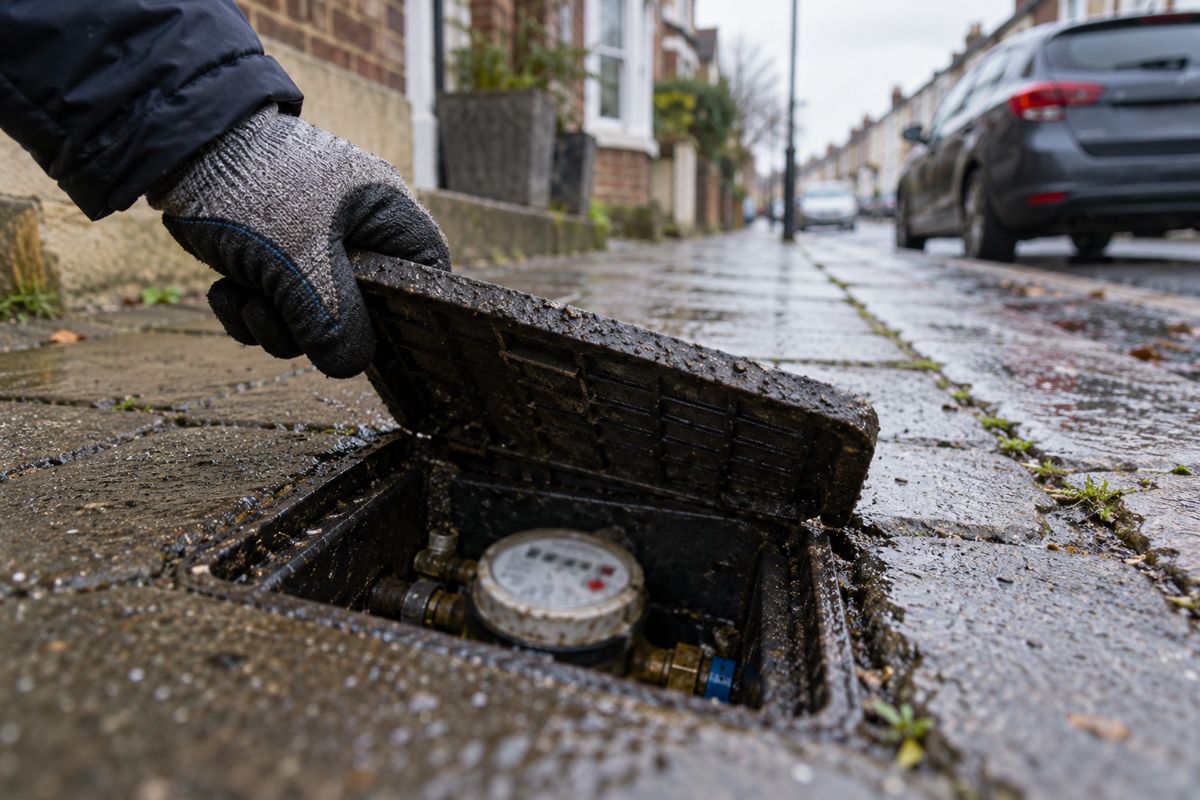
- Find your meter. In many homes it is in a box set into the pavement or near the boundary, and sometimes it is under the kitchen sink or in a hallway.
- Look at the dial or the small leak indicator. On many meters it is a little triangle or wheel that spins when water is moving through.
- If it is turning, take a photo of the reading. Wait an hour without using water and check again.
- If the reading has gone up, water is escaping somewhere in the pipework.
A toilet cistern that is slowly leaking into the pan can also move the meter, so check that first by dropping a little food colouring into the cistern and seeing whether it appears in the pan without flushing.
Other signs inside the home
The meter is the strongest clue, but the house will often tell you too.
- A higher water bill. If you pay by meter and your usage jumps with no change in how many people live there, a leak is a likely reason.
- The sound of running water when the house is quiet, such as at night.
- Warm patches on the floor. A leak on a hot water or heating pipe can warm the floor above it.
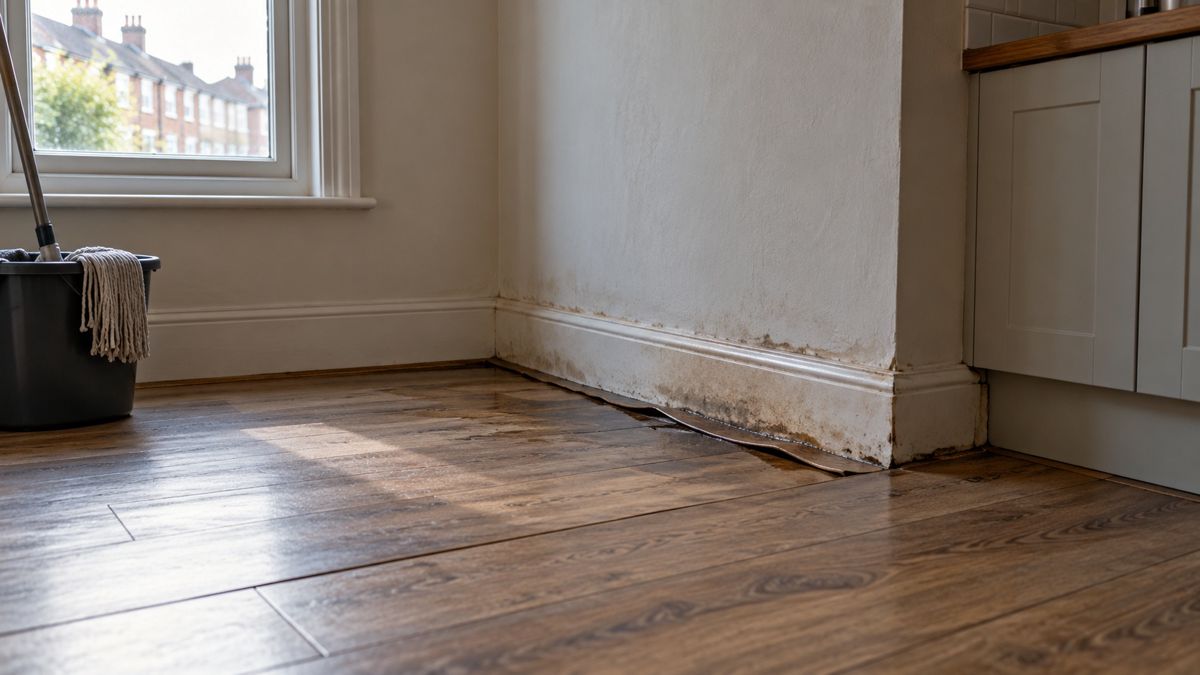
- Damp, a musty smell or mould along skirting boards or low on walls.
- Floors that lift or move. Laminate can swell, tiles can crack and screed can crumble.
- Falling boiler pressure. If you keep topping up a sealed heating system, water may be escaping from a buried pipe.
- Weak pressure at the taps. A large leak can steal water before it reaches you.
None of these proves a leak on its own. Damp can come from a failed gutter or a bridged damp course. But together with a moving meter, they are hard to ignore.
Why are hidden leaks common in Bristol homes?
Several things about the city make hidden leaks more likely than people expect.
Age and alteration. Georgian and Victorian terraces have been extended, converted into flats and re-plumbed over and over. Pipes have been joined to older pipes, and fittings from different decades are working side by side.
Old materials. Homes built before about 1970 can still have lead or galvanised steel pipework in places. Galvanised steel rusts from the inside, and lead is soft and best replaced.
Hard water. Bristol is a hard water area. Limescale builds up in pipes, valves and fittings, and over time it makes joints and valves more likely to fail.
Hills and ground movement. On steep streets, homes low on a slope can see higher mains pressure, which finds the weak spots in tired pipes. Ground movement can also strain buried pipes, especially in clay.
Cold snaps. Frost splits pipes in lofts, cellars and external walls. Often the split is only found when the thaw begins, and some slow leaks start from damage that was done in winter.
What should you do if you suspect a leak?
Act steadily rather than in a panic. A hidden leak is rarely a flood, but it does get worse.
- Check the meter as above, and take photos of the readings and the time.
- Look for the obvious. Check taps, toilet cisterns, the washing machine hose and the area under sinks.
- If water is clearly escaping, turn off the water at the stopcock. In many older houses it is under the sink, under the stairs or in the cellar.
- Switch off any heating if you think a hot or heating pipe is the problem, and keep away from damp electrics.
- Tell your landlord or managing agent if you rent. In a flat, tell the neighbours below.
- Contact your insurer. Some policies cover the cost of tracing a leak even when they do not cover the pipe repair, and they will often want to be told before work starts.
- Call a plumber to trace the source before you pull up floors yourself.
How are hidden leaks found and fixed?
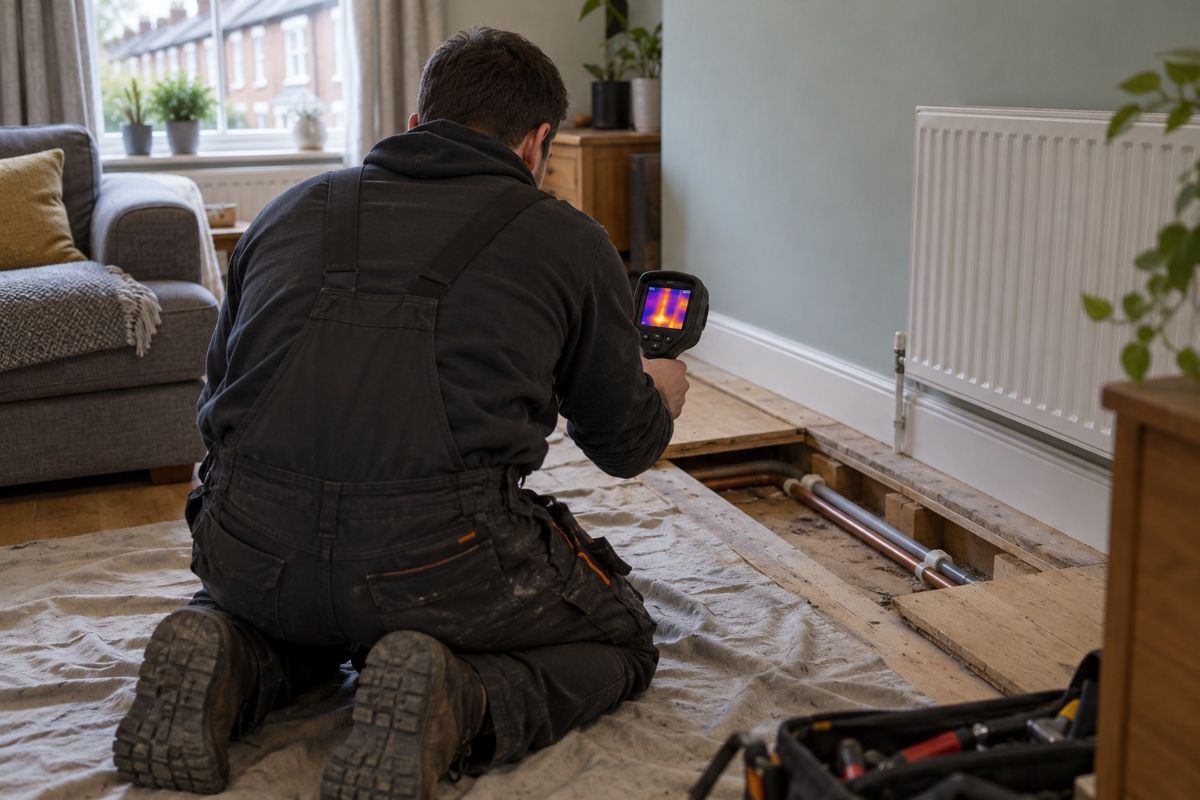
Guessing wastes time and makes a mess. A plumber will usually start with the meter and then narrow the problem down by isolating sections of pipe and pressure testing them. Depending on the case, sensitive listening equipment can pick up the sound of water escaping through a pipe, and a thermal camera can show where a warm pipe is leaking under a floor.
Once the spot is found, the opening in the floor or wall is kept small. A short section of pipe is cut out and replaced, or a joint is remade, and the repair is tested under pressure. Then the area is ready for a builder, plasterer or flooring fitter to make good. If the pipe is lead or badly corroded, or there are leaks in several places, it is worth asking about replacing a longer run, or repiping the property in stages.
Where to get help in Bristol
A hidden leak is one of those problems that is cheaper to deal with early. If your meter is moving, your bill has jumped or a floor feels warm or damp, our page on slab leak detection and repiping in Bristol explains how we trace leaks and what affects the quote. If water is coming through a ceiling right now, read our emergency plumbing page for what to do while you wait. Either way, you will get a written quote before any work starts.